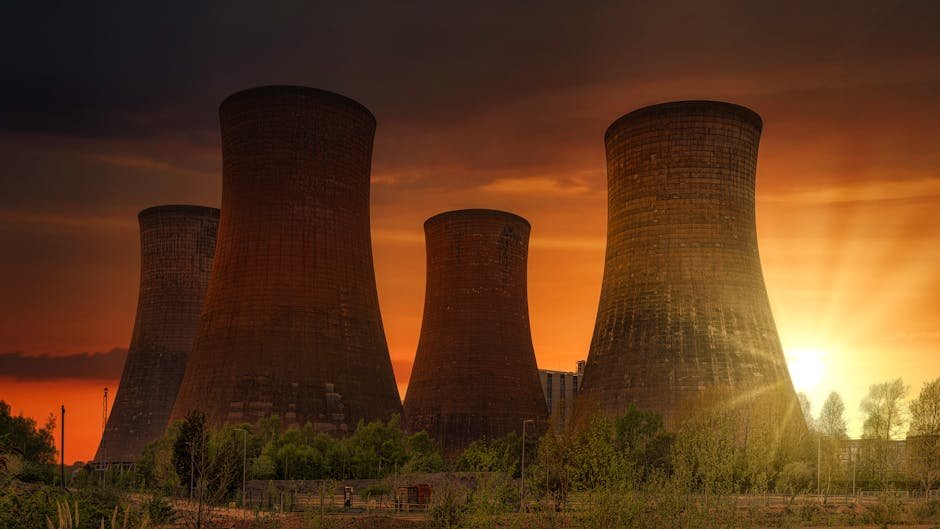
Fusion Energy: Our Power Future?
California, always chasing. Gold rushes, tech booms—innovation is our thing. But what if the next big energy idea wasn’t just renewable, but limitless? Hello, Fusion Energy, folks. That’s star-power stuff. Maybe the clean, cheap juice we need to keep the Golden State humming.
Our Ride: From Sun Power to Silicon
For ages, we humans just used sun and fire. Kinda simple, right? Then agriculture hit, bringing running water power. Whirring mills, flowing canals. Fast forward to the 18th century. Boom! Industrial Revolution! Massive steam engines took over, then electricity. Things really sped up after that. Our whole civilization now? Our tech? All rocketed ahead. Because electricity became modern life’s absolute backbone.
Early power? Filthy. Just imagine: thermal plants burning wood, coal, oil. So much pollution, so pricey. And never enough. Then big hydro dams showed up, promising clean power. But even those couldn’t handle our never-ending need for more energy.
Nukes: The Dream That Died
And then, the 1950s. Nuclear power just exploded onto the scene. Reactors popped up everywhere, sold as cheap, clean, totally safe. Governments even called nuclear nations elite, superior. Well, guess what? Not so clean. Not really cheap. Definitely not safe.
Chernobyl in ’84? Ouch. Fukushima, just years later? A huge wake-up call. Whole damn cities gone. Nobody lives there, not for generations. But critics shout it: modern nuclear plants? Theoretically safe, they say. Murphy’s Law always wins. Something will break eventually. And when it does, disaster. Human lives lost. Huge chunks of land ruined for decades. And another thing: It’s not cheap. A new nuclear plant in Turkey, for instance, is set to double current electricity costs, hiking consumer bills by 4-8%. A crazy gamble, seriously. We’ve seen it crash and burn before.
Renewables: Good, But Not The Whole Picture
Meanwhile, climate change? Right here, in our face. Global warming isn’t coming. It showed up. Seasons? Totally off. Extreme weather? Standard now. So, yeah, we dove headfirst into renewable energy. Good move, honestly.
North America, Europe, Asia – they’re throwing money at renewables. China? Pumping out wind turbines and solar panels like crazy, for them and for export. The U.S. Navy. Even looking at wave machines. Switzerland and Germany? Nearly full renewable grids. Awesome progress! But here’s the problem: even with this massive boom, we need more power. Our demand is shooting up. Wind, solar, hydro, waves—they’re great. But they can’t quite meet global hunger for power. Not yet.
Fusion Energy: Star Power!
So, what’s left for us? Fusion Energy. Sounds like sci-fi, right? But it’s totally real. Stars’ secret power. It’s hydrogen atoms crushing together under insane heat and pressure, creating helium, and spitting out an insane amount of clean light and heat. Earth scientists want a piece of that.
Unlike nuclear fission (which splits heavy, radioactive atoms like uranium for bombs and reactors), fusion just merges light atoms. No heavy, nasty radioactive stuff needed. Just hydrogen and its isotopes—deuterium and tritium. Super common. Dirt cheap. The energy from it? Mind-blowing. An atom bomb? Beside controlled fusion, it’d barely be brighter than your phone’s notification light. That’s the kind of juice we’re talking.
The Hurdles: Why No Fusion Yet?
Sounds like an easy win, right? Nope. Stars got massive gravity. We don’t. To make hydrogen fuse, you need like, tens of millions of degrees Celsius. And huge pressure. Trying to make a mini-star in a lab? That’s the actual trick.
Scientists are figuring it out with “tokamaks.” These are big electromagnetic trapping and squishing machines for superheated plasma (deuterium and tritium). They try to get those hydrogen atoms to smash together.
The catch? Stability. And net energy. Keeping that plasma steady enough to keep a reaction going? Super hard. Record’s only a few milliseconds. We need way longer—15-20 seconds, minimum—just to boil water and spin turbines for electricity. Because tokamaks themselves? They eat a ton of power to run. We’re talking 100 watts in, maybe 104-110 watts out. Money-wise? Not a jackpot.
ITER and the Global Race
But don’t despair. These problems? They’re solving ’em. In France, the ITER project—biggest experimental fusion reactor globally—is being built. It’s a huge international effort: EU, U.S., Canada, Russia, China, India, Japan. All in. Costs roughly $16 billion. When it fires up in the early 2020s? ITER wants a 1:5 energy output. That’s 100 watts in, 500 watts out. Total game changer.
And ITER isn’t alone. Lockheed Martin? They’re making mobile fusion reactors for the military. Small enough to fit in a shipping container. By the 2020s, these could power subs, ships, remote bases. Giving huge strategic and money wins. Industry guys predict: first commercial fusion reactors by 2025-2030. After that? Expect a big shift away from old-school nuclear fission.
California’s Role in Fusion
So, how about us in California, in this front-runner race? Honestly? It’s a mixed bag. We’re hella into renewables, sure. But for pioneering next-gen energy like fusion? Jury’s still out. Private cash here, like everywhere, usually chases quick profits. Real estate. Distribution deals. Not big, risky, long-term R&D.
And that’s just a raw deal for our future. Without big money and some smart, risky moves, California could just buy this tech. Instead of leading its development. Think of the money. Cleaner air. If we led the way! The world’s biggest players? Pouring billions into fusion. They know by 2030, cheap, clean power changes everything: politics, money, daily life. Electric cars? Just the start. Old fossil fuel countries? Bad time. The smart money is backing the future-builders. California needs to grab a seat on that train.
Quick Q&A
Q: Fusion vs. today’s nukes? What’s the deal?
A: Today’s nuclear power? Fission. It splits big, radioactive atoms, like uranium. Fusion energy? Totally different. It merges light atoms, usually hydrogen. Just like stars. Way more energy, less nasty, lasting waste.
Q: Why isn’t Fusion Energy used everywhere now?
A: Two main headaches. First, keeping the fusion reaction stable. For long enough. Right now, it’s milliseconds. We need it for ages. Second, net energy gain. The reactor needs to make more power than it uses. Still figuring that out.
Q: So, when do we get commercial fusion power plants?
A: ITER, that experimental reactor, is set to start in the early 2020s. But experts think the first commercial ones? Running by 2025-2030. After that, it could totally change how the world gets power.