Chernobyl Disaster: When Ambition Blew Up. Literally
What happens when ambition kills caution? When showing off matters more than being safe? The Chernobyl disaster. Not just some big explosion. Nope. It was a messed-up mix of bad engineering, human screw-ups, and a deeply broken system. Some folks think nuclear power is just a ticking time bomb. But understanding Chernobyl means getting straight about a huge moment in energy history. No fear-mongering. Just truth. It forced us to stare down the super real, super dangerous results of cutting corners and a seriously lacking safety culture.
Okay, so the RBMK Reactor. A total mess
Back in the 60s, the Soviet Union really wanted nuclear power. Bad. They planned to dump a massive 12 gigawatts onto their grid in ten years. Not just for juice, mind you. Prestige. And flexing their nuclear muscle. So, they picked the RBMK reactor – that’s “High-Power Channel-type Reactor” in Russian. Biggest reactor ever. Looked genius on paper. Three times bigger than American designs! But man, some seriously deadly problems hid in its guts.
And another thing: this wasn’t some oopsie. The RBMK’s core? A humongous 1700-ton graphite block. Its job? Slow down neutrons, keep the reaction going. Sounds fine. Until it catches fire. Which graphite does. Bigtime. So, of course, fighting the blaze was pure hell. Then, fuel channels. Zirconium alloy tubes packed with uranium. Too hot? Zirconium mixes with water, spewing out highly flammable hydrogen. Yeah, not what you want.
But the really big problem, the one that gets you, was its positive void coefficient. Regular reactors—the safe kind—if cooling water starts steaming up (making ‘voids’), the power drops. Good. Not the RBMK. Opposite. Steam? More power. A super-dangerous loop. And it could just go totally wild. Super deadly, especially when running low on power. Below 20%, it became unstable. Freaky. Under 7%? Good luck.
And those control rods, right? The ones supposed to shut it down. They had graphite tips. So, you hit the emergency button, and these tips actually cause a brief, massive power spike down in the reactor’s base. Before anything else. Took like 18 or 20 seconds for the rods to fully drop. An absolute age in a runaway nuclear reaction. Plus, its size. Tracking real-time neutron behavior was a no-go with their slow computers. Data? Every 15 minutes. So useless. And warnings? Totally brushed off. Just four years before, another RBMK had a fuel rod blow up. Everyone said “fix the rods!” Nobody listened.
The big “safety” test on April 25-26, 1986. What a joke. They wanted to see if spinning turbines could keep cooling pumps alive during a power outage. Failed three times getting there. But they tried again. The mistakes just kept stacking up. They turned off the emergency core cooling system (ECCS)! On purpose! Total violation of safety rules. Then, Kyiv needed power, delaying the test. This meant xenon built up inside – it soaks up neutrons, makes the reactor super twitchy. Operators, desperate, yanked out almost all the control rods. Only 6-8 left. Required minimum? Fifteen. The reactor? Wildly unstable. Way beyond its safe zone.
At 1:23:04 AM, game on. Test started. Steam gone. Water flow gone. The positive void coefficient did its deadly thing. Power surged. Alarms blared everywhere. Operators hit the AZ-5 emergency shutdown button. Too late. 36 seconds late. Those graphite tips? They gave the final, fatal push. Fuel temp rocketed past 600 calories per gram. Solid fuel became glowing dust. Hydrogen exploded from the zirconium. The first blast, at 1:23:40 AM, ripped apart fuel channels. It chucked the 2,000-ton reactor lid into the stratosphere. And a second blast, probably hydrogen, blew the entire roof off. Then, the graphite caught fire.
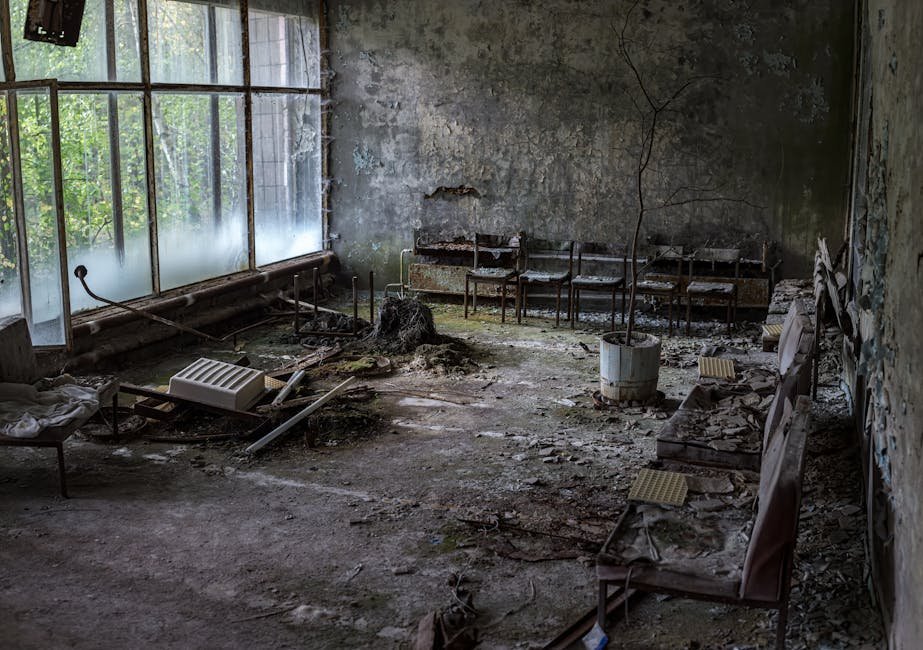
Firefighters, brave fools, ran right in. Didn’t know about the radiation. Many died quick from acute radiation sickness. Just weeks. The Soviet gov tried to hush it all up. Pripyat, the city next door, only got evacuated 36 hours later. Sweden’s radiation detectors actually told the world. Cleanup dragged on for months. Helicopters dropped tons of sand, lead, and boron. Thousands of tons! Hundreds of thousands of “liquidators” got fried with radiation. They eventually put a massive concrete tomb over the ruins. The human cost? Debated. Official word: 31 direct deaths. UN says 28. But plenty of studies point to hundreds more first responders. And thousands of cancer cases down the line. Environmentally, a huge area—2,600 square kilometers—is untouched, unusable. Pripyat? Ghost town. Total ghost town.
Safety Culture: Just Not There
It wasn’t just the tech glitches, though. A systemic failure. Deep down. The Soviet nuclear program had zero independent oversight. So, safety stuff? Never questioned. Never challenged. The whole safety culture was pathetic, usually taking a backseat to getting things built and political demands. Operators, even with all that crazy machinery, weren’t properly trained for emergencies. Or how to act when things went sideways. Most chilling part? Nobody, in that whole top-down mess, dared to say “Hey, maybe don’t turn off the ECCS?” That’s basic. Also, no way to even stop the test once it went really bad.
After Chernobyl: Nuclear, But Way Safer
And so, the Chernobyl disaster. Not just sad, not just a tragedy. A brutally hard lesson. The whole nuclear industry? It completely pivoted. Nobody’s designing RBMK reactors anymore, that’s for sure. A few old ones are still running, but they’ve had huge safety makeovers. Big ones. But today’s reactors? Engineered differently. Light years away from Chernobyl’s deadly defects.
Modern Reactors: Built Safe From the Start
Today’s reactors? Got a fancy negative temperature coefficient built right in. Which just means: temp goes up, power automatically shrinks. It’s a natural, self-regulating safety thing. Total opposite of the RBMK’s killer flaw.
Passive Systems: A Backup That Doesn’t Need Power
Also, modern nuclear plants use passive safety systems. Smart stuff. They can cool a reactor, stop a meltdown, even if all the outside power dies. No people needed. No electricity. It’s like a built-in backup. No batteries required.
Global Teamwork: Learning Together
The whole world actually started getting along after Chernobyl. Seriously. The World Association of Nuclear Operators (WANO) popped up in ’89. A really key group. It gets operators from everywhere to share what they know, do peer checks, set up international best practices. The goal? Don’t mess up again. Anywhere.
The Big Takeaway: Culture Above All
Chernobyl’s biggest lesson? Not just about cooler tech. It’s about a massive change in safety culture. We found out that even the toughest tech stuff can get messed up by people. Safety? It’s not just a list to tick off. It’s a living, breathing thing. Today’s nuclear plants demand a “questioning attitude.” Everyone. Operators, engineers, workers – encouraged to flag even tiny weirdness. No fear of getting fired. A solid, open safety culture is just as vital as the concrete and steel wrapping the core. Nuclear energy is still super clean, super efficient. But using it right means always remembering the past. The Chernobyl disaster reminds us: tech is powerful. Our responsibility? Even bigger.
Quick Questions People Ask
QQ: So, what was the RBMK’s main screw-up?
A: That positive void coefficient. If the cooling water steamed up (making ‘voids’), the RBMK’s power would shoot up, not drop. A wild, out-of-control loop.
QQ: What was so wrong with Chernobyl’s control rods?
A: Graphite tips. When they tried to shut it down fast, those tips caused a quick, local power spike at the bottom. Made everything way worse.
QQ: What big safety changes came after Chernobyl?
A: Well, new reactors got negative temperature coefficients (power drops when temp rises). And passive safety systems that cool things automatically, even with no power. Also, a huge push for independent checks and a tough, global safety culture, like with WANO.